Commercial freight services are essential for businesses that need reliable, scalable, and efficient transportation solutions to support daily operations and long-term growth. From regional distribution to national shipping networks, business freight transport ensures goods move consistently between suppliers, warehouses, and customers.
As companies expand, freight demands become more complex. Commercial shipping solutions must support increasing shipment volumes, tighter delivery schedules, and broader geographic coverage. Businesses rely on freight logistics services to coordinate cargo movement, optimize routes, and maintain delivery performance across evolving supply chains.
Cargo transport for businesses involves more than moving freight from one location to another. It requires scheduling precision, logistics coordination, compliance management, and the flexibility to adapt to changing operational needs. Scalable freight solutions help companies respond to growth without sacrificing reliability or cost control.
Industries such as manufacturing, retail, construction, distribution, and industrial supply chains depend heavily on commercial freight services to maintain workflow continuity and customer satisfaction. Reliable transport systems reduce delays, improve inventory management, and strengthen operational efficiency.
According to Statistics Canada, transportation and logistics activity continue to play a major role in supporting Canadian supply chains, commercial distribution, and economic stability. As freight demand increases across regional and national markets, businesses increasingly depend on structured commercial freight services to maintain operational continuity and delivery efficiency.
For organizations focused on growth and long-term scalability, partnering with experienced providers of commercial freight services is a strategic investment that supports stable logistics operations and sustainable business expansion.
What Commercial Freight Services Include
Commercial freight services include the transportation, coordination, and management of cargo movement for businesses operating across regional, national, and cross-border supply chains. These services are designed to support operational efficiency by ensuring that freight moves safely, predictably, and according to schedule.
Modern commercial freight services go beyond simple transportation. They integrate logistics planning, carrier management, scheduling systems, and operational oversight into a structured framework that supports long-term business performance. By combining planning with execution, commercial freight services help companies maintain stable supply chains and consistent delivery outcomes even as operational complexity increases.
Businesses across manufacturing, retail, construction, distribution, and industrial sectors rely on commercial freight services to support ongoing operations, manage inventory flow, and meet customer expectations. In fast-moving commercial environments, dependable freight coordination is essential for maintaining productivity and avoiding disruptions.
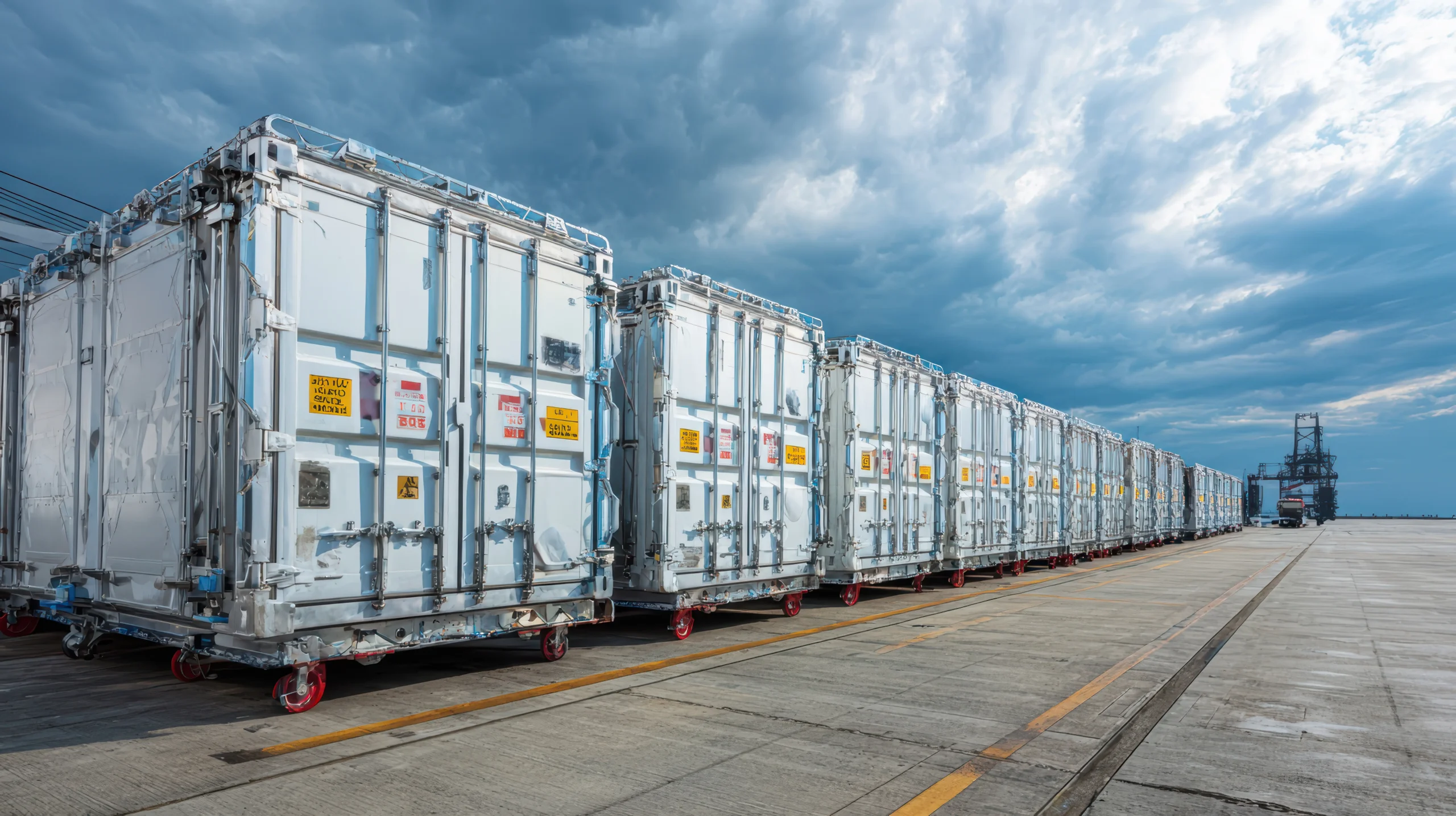
Commercial freight services support efficient container transportation across supply chains
Core Components of Business Freight Transport
Business freight transport within commercial freight services typically includes shipment planning, route optimization, carrier coordination, cargo handling, and delivery scheduling. Each of these components plays a critical role in maintaining reliable freight movement and ensuring that shipments reach their destination efficiently.
One of the primary strengths of commercial freight services is their ability to coordinate freight through every stage of transport. This includes aligning pickup schedules with warehouse operations, selecting efficient delivery routes, and ensuring that cargo handling procedures match shipment requirements.
Route optimization is another essential part of commercial freight services. By analyzing traffic patterns, infrastructure conditions, and delivery windows, providers reduce transit delays and improve operational efficiency. Efficient routing also contributes to lower transportation costs and more predictable delivery timelines.
Carrier coordination within commercial freight services ensures that the right equipment and transport resources are assigned to each shipment. Whether managing palletized freight, industrial materials, or recurring retail deliveries, structured coordination helps maintain consistency and minimize operational gaps.
In addition, commercial freight services emphasize visibility and communication. Tracking systems and real-time updates allow businesses to monitor shipment progress, anticipate delivery times, and respond quickly to any disruptions. This transparency strengthens overall logistics performance and improves supply chain reliability.
Role of Freight Logistics Services in Commercial Shipping
Freight logistics services are a central component of commercial freight services, managing the coordination required to keep shipping operations running smoothly. Without structured logistics systems, commercial transport operations can become fragmented, leading to delays, inefficiencies, and inconsistent delivery performance.
Within commercial freight services, logistics coordination connects carriers, warehouses, suppliers, and customers into one integrated process. This alignment ensures that shipments move according to schedule and that each stage of transport supports broader operational goals.
Another important role of logistics coordination in commercial freight services is performance management. Providers monitor delivery timelines, carrier performance, and shipment status to maintain operational consistency. This level of oversight reduces variability and improves long-term reliability.
Cargo transport becomes significantly more dependable when commercial freight services integrate planning, tracking, and communication into a unified logistics framework. Businesses benefit from stronger control, improved visibility, and more accurate delivery forecasting.
Freight Solutions for Growing Businesses
As companies expand operations, enter new markets, and manage higher shipment volumes, commercial freight services become increasingly important. Growth introduces additional logistics complexity, including more destinations, tighter delivery windows, and higher customer expectations.
Businesses that invest in scalable commercial freight services gain the flexibility needed to support long-term operational expansion without compromising delivery performance. Instead of rebuilding logistics systems as demand grows, companies can rely on structured freight solutions that scale alongside their operations.
Supporting Operational Expansion Through Scalable Freight Solutions
Scalable freight solutions within commercial freight services allow businesses to increase shipping capacity while maintaining efficiency and consistency. As operational demand rises, transport networks, scheduling systems, and carrier coordination processes can expand without disrupting existing workflows.
Professional providers of commercial freight services help businesses maintain reliable freight movement even as shipment frequency and geographic coverage increase. This scalability is essential for companies entering new markets or managing rapid growth.
Another advantage of scalable commercial freight services is operational flexibility. Businesses can adapt to fluctuating demand levels, seasonal shipping cycles, or unexpected increases in freight volume without overwhelming internal logistics resources.
Commercial Shipping Solutions for Increasing Shipment Volume
Growing companies often face rising inventory movement, more complex routing requirements, and stricter delivery expectations. Commercial freight services support this transition by optimizing freight flow and improving coordination across supply chains.
As shipment volume increases, businesses require more advanced logistics systems to maintain control over scheduling, routing, and carrier management. Commercial freight services provide these systems through structured planning and integrated operational oversight.
Cargo transport becomes more efficient when commercial freight services are designed to scale with business demand. By improving coordination and reducing inefficiencies, businesses can maintain consistent delivery performance while supporting continued operational growth.
Ultimately, commercial freight services provide the infrastructure, flexibility, and logistics expertise necessary for businesses to expand confidently while maintaining stable and efficient freight operations.
Types of Commercial Freight Transport
Commercial freight services support a wide range of transportation models designed to match shipment size, urgency, cargo type, and geographic coverage. Because businesses operate under different logistical requirements, commercial freight services must provide flexible transport solutions that adapt to varying operational demands while maintaining consistent delivery performance.
Modern commercial freight services combine transportation execution with structured logistics coordination. This allows businesses to move freight efficiently across local, regional, national, and international supply chains without sacrificing visibility or reliability. By integrating scalable transport systems with operational planning, commercial freight services create efficient freight networks that support both day-to-day shipping and long-term business growth.
Modern commercial freight services connect ports, warehouses, and distribution networks
Full Truckload and Less Than Truckload Services
Two of the most common transportation models within commercial freight services are Full Truckload (FTL) and Less Than Truckload (LTL) shipping. Each model serves different operational needs depending on shipment volume, urgency, and delivery requirements.
Full Truckload Transport
Full truckload transport within commercial freight services dedicates an entire trailer to a single shipment. This model is ideal for businesses moving high-volume freight, time-sensitive cargo, or shipments requiring minimal handling during transit.
Because the trailer is reserved for one customer, FTL shipping reduces transfer points and handling risks while improving delivery consistency. Businesses using commercial freight services for large or urgent shipments often prefer full truckload transport due to its efficiency and predictable transit times.
FTL solutions are commonly used in manufacturing, retail distribution, industrial freight movement, and large-scale inventory replenishment operations where timing precision is critical.
Less Than Truckload Shipping
Less than truckload shipping is another key component of commercial freight services, designed for businesses shipping smaller freight volumes that do not require an entire trailer.
Under LTL shipping, multiple shipments from different businesses share trailer space. This allows commercial freight services providers to maximize transport efficiency while reducing costs for each individual shipment.
LTL shipping offers a cost-effective option for recurring palletized freight, retail inventory movement, and moderate-volume cargo. By consolidating freight and optimizing routes, commercial freight services maintain reliable delivery performance while improving overall transportation efficiency.
Regional, National, and Cross-Border Cargo Transport for Businesses
Commercial freight services operate across multiple geographic scopes depending on business needs. Cargo transport may occur within a local region, across Canada, or through cross-border trade corridors connecting Canada and the United States.
Regional Freight Operations
Regional transport within commercial freight services supports local distribution networks, warehouse transfers, and recurring deliveries within defined geographic areas. These operations often prioritize scheduling flexibility and shorter transit times.
National Freight Networks
National transport solutions within commercial freight services connect major commercial centers across Canada. These long-haul routes require structured route planning, disciplined scheduling, and coordinated carrier management to maintain delivery consistency over extended distances.
Cross-Border Freight Movement
Warehouse coordination improves the accuracy of commercial freight services
Cross-border transport is another critical area of commercial freight services, especially for businesses involved in international trade. These operations require customs coordination, regulatory compliance, and synchronized logistics planning to ensure smooth freight movement between Canada and the United States.
By supporting regional, national, and international shipping operations, commercial freight services provide scalable logistics systems that allow businesses to expand distribution networks without disrupting operational performance.
Specialized Freight Handling and Scheduled Deliveries
Many industries require specialized transport capabilities beyond standard freight movement. Commercial freight services adapt equipment, handling procedures, and scheduling systems to support these unique operational requirements.
Specialized Cargo Handling
Certain shipments involve oversized cargo, industrial equipment, construction materials, temperature-sensitive products, or regulated goods. These freight categories require customized handling methods and transport equipment.
Professional providers of commercial freight services coordinate secure loading, route planning, and compliance management to ensure that specialized freight moves safely and efficiently.
Scheduled Delivery Services
Scheduled delivery programs are another important part of commercial freight services, particularly for businesses operating recurring shipment cycles. Manufacturers, distributors, and retailers often depend on fixed delivery schedules to maintain inventory flow and operational continuity.
Structured scheduling systems allow commercial freight services providers to maintain timing consistency, reduce variability, and support long-term logistics stability.
How Freight Services Scale With Demand
As businesses grow, logistics operations become more complex. Shipment volumes increase, delivery regions expand, and customer expectations become more demanding. Commercial freight services must therefore scale efficiently to support operational growth without compromising delivery performance.
Scalable freight systems ensure that businesses can expand while maintaining reliability, visibility, and cost control across their supply chains.
Flexible Capacity and Route Optimization
One of the primary strengths of scalable commercial freight services is the ability to expand transport capacity as demand increases. This may involve adding equipment, increasing carrier partnerships, or optimizing delivery routes to support larger shipment volumes.
Flexible capacity planning allows commercial freight services providers to adapt quickly to fluctuations in demand without disrupting existing operations. Businesses benefit from stable freight movement even during periods of rapid growth or seasonal spikes.
Route optimization also plays a critical role. By improving routing efficiency, commercial freight services reduce transit times, lower fuel consumption, and maintain predictable delivery schedules across expanding transport networks.
Technology, Tracking, and Logistics Coordination
Technology is essential for scaling modern commercial freight services effectively. Freight logistics systems use tracking platforms, scheduling software, and communication tools to manage growing operations with greater precision and visibility.
Real-time tracking within commercial freight services allows businesses to monitor shipment progress, anticipate delays, and maintain better control over logistics operations. Integrated communication systems improve coordination between carriers, warehouses, suppliers, and customers.
As shipment complexity increases, technology-driven commercial freight services provide the operational visibility and control required to maintain efficiency at scale.
RECOMMENDED FOR YOU
Freight Forwarding From the USA to Canada: Process,
Costs, and Timelines
Managing Seasonal and High-Volume Freight Operations
Many industries experience seasonal demand spikes that place additional pressure on logistics systems. Retail distribution, construction activity, and industrial production cycles often create temporary increases in shipping volume.
Professional commercial freight services respond by adjusting scheduling systems, expanding carrier capacity, and reallocating transport resources to maintain delivery consistency during peak periods.
Scalable logistics systems allow commercial freight services providers to support increased operational demand without compromising shipment reliability. This flexibility helps businesses meet customer expectations, maintain inventory flow, and avoid disruptions during high-volume shipping cycles.
Ultimately, commercial freight services provide the infrastructure, coordinatio
Request Commercial Freight Support
Engaging professional commercial freight services begins with clear operational planning and accurate shipment details. Businesses that coordinate freight requirements early benefit from stronger delivery reliability, improved cost control, and more efficient logistics performance. In increasingly competitive supply chains, commercial freight services provide the structure needed to manage growing transportation demands without sacrificing consistency or operational control.
As shipping operations become more complex, commercial freight services help businesses maintain scalability through organized logistics coordination, route optimization, and disciplined scheduling. Rather than managing freight through fragmented processes, companies gain access to integrated systems that support long-term operational efficiency and predictable delivery performance.
When Businesses Should Outsource Freight Operations
As businesses grow, transportation and logistics operations often become more difficult to manage internally. Expanding delivery regions, rising shipment volumes, tighter timelines, and increasing customer expectations all place additional pressure on internal teams and operational systems. What may have once been manageable through basic coordination can quickly evolve into a complex logistics environment that requires specialized oversight, scalable infrastructure, and continuous operational monitoring.
Many organizations reach a point where managing transportation internally begins to consume too much time, labor, and operational resources. Coordinating pickups, scheduling deliveries, monitoring carrier availability, handling shipment issues, and maintaining delivery consistency across multiple regions can become increasingly challenging as supply chains expand.
Growth also introduces operational complexity in several areas simultaneously. Businesses may begin serving new geographic markets, managing larger inventories, supporting additional warehouse locations, or handling more frequent shipments. As this complexity increases, transportation systems must become more organized, scalable, and responsive in order to maintain operational efficiency.
Rather than investing heavily in internal fleet operations, dispatch management, equipment acquisition, staffing, and logistics infrastructure, many businesses choose to outsource freight coordination to experienced transportation providers that already operate structured logistics systems. This allows organizations to access established transport networks, carrier coordination systems, route planning expertise, and scalable operational support without building these capabilities entirely in-house.
Outsourcing freight operations also improves flexibility. Businesses can adapt more easily to changing shipment demand, seasonal fluctuations, urgent delivery requirements, or regional expansion without overwhelming internal resources. Structured logistics systems provide the ability to scale transportation capacity up or down depending on operational requirements.
This approach is especially valuable for organizations managing:
Recurring shipment cycles
Regional distribution growth
Multi-location delivery operations
Time-sensitive freight movement
Large-volume cargo transport
Seasonal inventory fluctuations
Expanding customer delivery networks
Another major advantage of outsourcing transportation coordination is operational focus. Internal teams can dedicate more attention to production, inventory management, customer service, sales, and business development while experienced logistics professionals manage freight movement, scheduling, dispatch coordination, and delivery execution.
Businesses also benefit from improved shipment visibility and operational consistency. Experienced logistics providers use structured planning systems, route optimization tools, scheduling platforms, and real-time communication processes that help maintain stable delivery performance across increasingly complex supply chains.
As transportation operations grow more demanding, outsourcing freight coordination becomes less about convenience and more about maintaining efficiency, scalability, and long-term operational stability.
Skilled freight handling teams strengthen commercial freight services operations
Information Needed for Accurate Freight Planning and Quotes
Accurate freight planning is one of the most important factors in maintaining efficient transportation operations and reliable delivery performance. Effective logistics coordination depends heavily on having complete, precise, and detailed shipment information before transport planning begins.
Without accurate shipment data, routing decisions become less efficient, equipment allocation may be incorrect, scheduling gaps can occur, and unexpected operational costs may arise during transit. Detailed planning allows logistics teams to build efficient transportation strategies that support consistent delivery timelines, proper resource allocation, and stable freight performance.
To create accurate freight quotes and transport plans, logistics providers typically require detailed operational information such as:
Cargo type and freight classification
Shipment weight and dimensions
Pickup and delivery locations
Delivery deadlines and scheduling requirements
Shipment frequency and recurring volume
Special handling or loading requirements
Equipment specifications or trailer needs
Dock access limitations or site conditions
Providing complete shipment information allows logistics teams to optimize route planning more effectively. Efficient route coordination reduces unnecessary mileage, minimizes transit delays, and improves overall transportation efficiency across regional and national freight corridors.
Detailed shipment data also improves equipment allocation. Different freight types may require specialized trailers, temperature-controlled units, liftgate services, flatbeds, or reinforced transport equipment. Accurate information ensures that the appropriate resources are assigned from the beginning of the transport process.
Scheduling precision is another major advantage of detailed freight planning. When logistics providers clearly understand delivery windows, freight volume, and operational timelines, they can coordinate pickups and deliveries more accurately while reducing the likelihood of missed appointments or delivery disruptions.
Accurate planning also contributes directly to cost stability. Incomplete or inaccurate shipment information often leads to route adjustments, equipment mismatches, additional handling, or unexpected operational delays that increase transportation expenses. Detailed freight data helps prevent these inefficiencies before the shipment begins moving.
In modern logistics environments, transportation planning increasingly relies on data-driven operational systems. Routing software, scheduling platforms, tracking systems, and carrier coordination tools all perform more effectively when supported by complete and accurate shipment information.
Another important benefit of detailed freight planning is improved communication throughout the supply chain. Clear shipment specifications help align carriers, dispatch teams, warehouses, suppliers, and receiving facilities around the same operational expectations. This coordination reduces confusion, strengthens delivery consistency, and improves overall logistics performance.
As supply chains become more complex and shipment demands continue increasing, businesses that prioritize detailed freight planning gain stronger operational control, better delivery predictability, and more efficient transportation performance across all stages of cargo movement.
Frequently Asked Questions (FAQs)
What are commercial freight services?
Commercial freight services involve transporting and coordinating cargo movement for businesses across regional, national, and international routes. These services include logistics planning, carrier coordination, scheduling, and delivery execution.
How do freight services support business growth?
Commercial freight services support growth by providing scalable logistics systems that adapt to increasing shipment volumes and expanding distribution networks. They allow businesses to grow without overloading internal operations.
What types of freight are handled commercially?
Businesses use commercial freight services to transport palletized goods, industrial materials, retail inventory, machinery, construction supplies, and bulk cargo across various industries.
How do companies scale freight operations?
Companies scale operations through commercial freight services by optimizing routes, increasing carrier capacity, improving scheduling systems, and integrating structured logistics coordination into supply chain operations.
When should businesses outsource freight services?
Businesses typically outsource to commercial freight services providers when logistics become too complex to manage internally, shipment demand increases significantly, or operational efficiency becomes difficult to maintain.
Looking for dependable freight coordination and scalable shipping support for your growing operations? Our team provides structured commercial freight solutions designed to improve delivery consistency, optimize logistics performance, and support long-term business growth across Canada. Whether you need regional distribution, recurring freight movement, or scalable transportation systems, we’re ready to help streamline your supply chain operations. Contact our logistics team today to discuss customized freight solutions tailored to your business needs.
Conclusion
Commercial freight services provide the transportation structure and logistics coordination businesses need to support operational growth and long-term efficiency. By combining scalable freight systems with reliable cargo movement, commercial freight services help companies maintain consistent delivery performance as demand and distribution complexity increase.
For organizations focused on expansion, supply chain stability, and operational flexibility, partnering with experienced providers of commercial freight services is a strategic investment. With the right logistics support, businesses can improve efficiency, strengthen delivery reliability, and build a scalable foundation for sustainable growth.










No comment