

Professional driver entering semi-truck during Cross-border trucking Canada to USA freight transportation service at logistics yard

Introduction

Cross-border trucking Canada to USA is one of the most critical freight channels for businesses operating across North American markets. With tightly integrated supply chains, daily trade volumes, and just-in-time delivery expectations, commercial trucking remains the most flexible and reliable way to move goods between Canada and the United States.

Canada–USA trade depends on efficient border movement. While air and rail play supporting roles, trucking enables direct point-to-point delivery, faster transit for commercial freight, and easier coordination with distribution centers on both sides of the border. For many industries, cross border freight services are not optional—they are essential to maintaining inventory flow and meeting contractual timelines.

Despite its efficiency, cross-border transportation involves added complexity. Customs documentation, regulatory compliance, inspection procedures, and coordination between Canadian and U.S. authorities all influence transit time and cost. This is why businesses often rely on experienced cross border transportation companies that understand both regulatory frameworks and operational realities.

From manufacturing inputs and retail inventory to industrial equipment and scheduled shipments, cross border shipping solutions support a wide range of commercial needs. When managed correctly, cross border transport companies help businesses reduce delays, control risk, and maintain predictable delivery performance across national boundaries.

For organizations moving goods between two of the world’s most active trading partners, selecting the right cross-border trucking Canada to USA provider is a strategic decision that directly affects reliability, speed, and long-term operational success.

Female truck driver using tablet for route planning during Cross-border trucking Canada to USA freight transport service

How Cross-Border Trucking Between Canada and the USA Works

Cross-border trucking Canada to USA follows a highly structured and compliance-driven process designed to move commercial freight efficiently while meeting regulatory, security, and documentation requirements on both sides of the border. Unlike domestic freight movement, Cross-border trucking Canada to USA requires close coordination between shippers, carriers, customs brokers, border agencies, and inspection authorities.

Because Cross-border trucking Canada to USA involves international trade regulations, every shipment must be planned carefully in advance. Professional carriers specializing in Cross-border trucking Canada to USA ensure documentation accuracy, customs pre-clearance preparation, and route optimization before freight even departs the origin facility.

Most Cross-border trucking Canada to USA operations begin with pre-arranged documentation, shipment classification, and detailed route planning. Commercial loads are scheduled through designated border crossings equipped for high-volume freight traffic. Experienced providers of Cross-border trucking Canada to USA analyze congestion trends, border wait times, seasonal conditions, and infrastructure capacity to select the most efficient corridor.

Efficient Cross-border trucking Canada to USA depends on advanced planning, electronic data submission, and compliance management. Without proper preparation, delays at inspection points can disrupt supply chains and increase transportation costs.

Overview of Canada–USA Commercial Freight Corridors

Major trade corridors play a central role in Cross-border trucking Canada to USA. These corridors connect Canadian manufacturing centers, agricultural regions, and distribution hubs with U.S. industrial and consumer markets.

For example, high-volume Cross-border trucking Canada to USA routes link:

  • British Columbia to Washington and California

  • Alberta to Montana and the Midwest

  • Ontario to Michigan, Ohio, and Illinois

  • Manitoba to North Dakota and central U.S. regions

Strategic corridor selection is critical in Cross-border trucking Canada to USA operations. Cross-border carriers evaluate freight type, delivery urgency, commodity regulations, and real-time border efficiency before finalizing routes. Choosing the correct trade corridor can significantly reduce transit delays, lower fuel consumption, and improve delivery predictability in Cross-border trucking Canada to USA shipments.

Because freight volumes between Canada and the United States are among the highest in the world, optimized corridor planning is a competitive advantage in Cross-border trucking Canada to USA logistics.

The Role of Customs Clearance in Cross-Border Trucking

Customs clearance is one of the most critical components of Cross-border trucking Canada to USA. Before a truck arrives at the border, shipment details are electronically transmitted to customs authorities for review and risk assessment.

In Cross-border trucking Canada to USA, accurate paperwork is essential. Required documentation may include commercial invoices, bills of lading, certificates of origin, and commodity classification codes. Experienced carriers handling Cross-border trucking Canada to USA work closely with customs brokers to verify that all information is complete and compliant before arrival at the border crossing.

When shipping from Canada to the United States—or from the USA to Canada—documentation errors are the most common cause of delays in Cross-border trucking Canada to USA operations. Incorrect product descriptions, valuation discrepancies, or incomplete compliance filings can result in secondary inspections or cargo holds.

Professional Cross-border trucking Canada to USA providers reduce these risks by:

  • Verifying shipment data before departure

  • Coordinating with licensed customs brokers

  • Monitoring regulatory updates

  • Ensuring drivers meet cross-border compliance requirements

  • Tracking border wait times in real time

Because regulatory environments can change, businesses relying on Cross-border trucking Canada to USA benefit from carriers who actively manage compliance and documentation processes.

In today’s integrated North American economy, Cross-border trucking Canada to USA is more than simple freight movement—it is a coordinated international logistics operation that combines route strategy, customs expertise, and structured planning. Businesses that partner with experienced providers of Cross-border trucking Canada to USA gain smoother border transitions, stronger compliance assurance, and more predictable delivery performance.
Freight Transportation Services in Canada Designed for Reliable Delivery

Reliable freight transportation services Canada businesses depend on are essential for…

You Might Also Like →

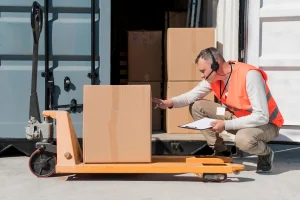
Warehouse worker inspecting shipment box during freight transport Canada operations at a loading dock with pallet truck and cargo container

Key Requirements for Cross-Border Freight Transportation

Successful cross-border trucking Canada to USA depends on meeting a set of strict regulatory, documentation, and security requirements. Unlike domestic freight, cross-border shipments are subject to oversight from multiple authorities, making preparation and compliance critical to avoiding delays.

Businesses that work with experienced cross border transportation companies reduce risk by ensuring every requirement is addressed before the shipment reaches the border.

Customs Documentation and Compliance

Accurate customs documentation is the foundation of cross border freight services. This typically includes commercial invoices, cargo descriptions, shipment values, and origin details submitted in advance through electronic systems.

Errors or missing information can result in inspections, holds, or shipment rejection. Whether moving goods southbound or shipping from USA to Canada, compliance with both Canadian and U.S. customs regulations is essential for smooth transit.

Carrier Licensing and Regulatory Standards

Cross border transport companies must meet licensing and safety standards enforced by authorities in both countries. This includes carrier registration, driver qualifications, vehicle compliance, and insurance coverage.

Professional carriers maintain up-to-date credentials to operate legally across borders, ensuring freight remains protected and compliant throughout the journey.

Border Security and Inspection Processes

Border security inspections are a routine part of cross-border trucking. Shipments may be selected for random or targeted inspections based on cargo type, origin, or compliance history.

Prepared carriers anticipate inspections by ensuring cargo is properly labeled, secured, and documented. Effective cross border shipping solutions factor inspection time into route planning to maintain realistic delivery timelines.

Professional driver performing safety tire check between trailers during Cross-border trucking Canada to USA logistics operations

Common Types of Cross-Border Freight

A wide range of commercial goods move daily through cross-border trucking Canada to USA, supporting integrated supply chains across North America. Understanding common freight categories helps businesses select the right cross border shipping solutions and prepare shipments for efficient border clearance.

Different cargo types present unique handling, documentation, and scheduling requirements, making specialized experience essential.

Commercial Goods and Retail Inventory

Retail inventory is one of the most frequently transported categories in cross border freight services. This includes packaged consumer goods, seasonal merchandise, and replenishment stock moving between distribution centers.

Cross border transportation companies coordinate delivery timelines closely to align with retail demand cycles and inventory planning. Accurate documentation and predictable transit times are critical in this category.

Industrial and Manufacturing Freight

Manufacturing operations rely on cross-border trucking to move raw materials, components, and finished products between facilities in Canada and the United States.

Industrial freight often involves higher value or heavier loads, requiring secure handling and strict compliance. Experienced cross border transport companies ensure that documentation, equipment, and routing support uninterrupted production schedules.

Time-Sensitive and Scheduled Shipments

Some cross-border shipments operate on fixed schedules or tight delivery windows. These include just-in-time manufacturing inputs and contractual deliveries.

Cross border shipping solutions designed for time-sensitive freight prioritize advance customs clearance, optimized routing, and proactive monitoring to reduce border-related delays.


Why Businesses Use Cross-Border Trucking Services

Cross-border trucking Canada to USA remains the preferred option for many businesses because it combines speed, control, and operational flexibility. In high-volume trade environments, trucking allows companies to move freight efficiently without the constraints often associated with other transportation modes.

For organizations operating on both sides of the border, cross border freight services support predictable supply chains and responsive delivery models.

Female truck driver opening cabin door of blue semi-truck for Cross-border trucking Canada to USA transport operations

Speed and Flexibility Compared to Other Transport Modes

Trucking offers direct, point-to-point delivery, reducing handling and transfer time. Unlike rail or maritime transport, cross border transportation companies can adjust routes, schedules, and pickup times with greater flexibility.

This adaptability is especially valuable for time-sensitive freight, where delays can disrupt production, retail availability, or contractual obligations.

Cost Efficiency for Commercial Freight Movement

For many shipment sizes and distances, cross border trucking provides a cost-effective balance between speed and expense. Commercial freight moved by truck avoids terminal handling fees and complex intermodal coordination.

Cross border shipping solutions also allow businesses to consolidate shipments, optimize routes, and control transportation costs while maintaining reliable delivery performance.

Request Cross-Border Freight Support

Starting a shipment with cross-border trucking Canada to USA services requires early coordination and accurate shipment details. Cross-border movements involve additional steps compared to domestic transport, making preparation essential for smooth border clearance and predictable delivery.

Businesses that engage experienced cross border transport companies early benefit from better route planning, realistic timelines, and reduced risk of customs-related delays.

When to Use Cross Border Transport Companies

Cross border transport companies are best used when shipments are time-sensitive, commercially valuable, or part of a recurring Canada–USA trade flow. Industries with just-in-time inventory models or fixed delivery schedules gain the most value from professional cross border freight services.

Early engagement allows carriers to manage customs pre-clearance, select optimal border crossings, and align transport capacity with shipment requirements.

Information Needed for Accurate Cross-Border Shipping Quotes

Accurate quotes depend on detailed shipment information. Freight type, declared value, dimensions, pickup and delivery locations, and required delivery dates all affect pricing and transit planning.

Providing complete details enables cross border shipping solutions to account for customs processing, inspection risk, and routing variables without unexpected cost adjustments.

Professional driver driving commercial truck on highway for Cross-border trucking Canada to USA logistics operations

Frequently Asked Questions (FAQs)

What is Cross-border trucking Canada to USA?

Cross-border trucking Canada to USA refers to the structured movement of commercial freight by licensed carriers operating between Canada and the United States. Unlike domestic freight, Cross-border trucking Canada to USA includes customs coordination, regulatory compliance, security screening, and bilateral trade documentation. Businesses using Cross-border trucking Canada to USA rely on professional carriers that understand both Canadian and U.S. transportation laws.

In practical terms, Cross-border trucking Canada to USA involves pickup at a Canadian or U.S. origin point, electronic customs pre-submission, coordinated border crossing through designated commercial corridors, and final delivery to distribution centers, warehouses, or manufacturing facilities. Because Cross-border trucking Canada to USA supports highly integrated North American supply chains, it is considered a critical logistics channel rather than a simple transportation service.

Companies that depend on Cross-border trucking Canada to USA typically move retail inventory, industrial materials, scheduled freight, or recurring commercial loads that require predictable transit times and compliance accuracy.

What documents are required for Cross-border trucking Canada to USA?

Successful Cross-border trucking Canada to USA shipments depend on complete and accurate documentation. Required paperwork for Cross-border trucking Canada to USA typically includes:

  • Commercial invoice

  • Bill of lading

  • Detailed cargo description

  • Declared shipment value

  • Harmonized System (HS) classification codes

  • Certificates of origin (when applicable)

  • Electronic customs filings for both countries

In Cross-border trucking Canada to USA operations, documentation is usually submitted electronically before the truck reaches the border. This pre-clearance process allows customs authorities to review shipment details in advance. Any errors in Cross-border trucking Canada to USA documentation—such as incorrect valuation, vague cargo descriptions, or missing classification codes—can lead to inspection delays.

Experienced providers of Cross-border trucking Canada to USA work closely with customs brokers to ensure compliance accuracy before departure. Because Cross-border trucking Canada to USA operates within a highly regulated environment, documentation precision directly affects transit speed and cost control.

How long does Cross-border trucking Canada to USA usually take?

Transit times for Cross-border trucking Canada to USA depend on several operational factors, including distance between origin and destination, selected border crossing, freight type, and inspection risk. In general, Cross-border trucking Canada to USA is faster than rail or ocean freight for most commercial shipments due to its direct point-to-point nature.

However, Cross-border trucking Canada to USA timelines can be influenced by:

  • Border congestion

  • Seasonal traffic fluctuations

  • Weather conditions

  • Inspection procedures

  • Documentation accuracy

When properly planned, Cross-border trucking Canada to USA offers predictable delivery windows that align with just-in-time inventory systems. Carriers specializing in Cross-border trucking Canada to USA monitor real-time border wait times and adjust routing strategies to maintain schedule reliability.

For businesses operating integrated Canada–USA supply chains, optimized Cross-border trucking Canada to USA planning reduces uncertainty and improves overall logistics performance.

What types of goods can be transported through Cross-border trucking Canada to USA?

A wide range of commercial freight moves daily through Cross-border trucking Canada to USA services. Common categories transported via Cross-border trucking Canada to USA include:

  • Retail and consumer goods

  • Manufacturing components

  • Raw materials

  • Industrial machinery

  • Agricultural products

  • Scheduled replenishment inventory

Cross-border trucking Canada to USA supports both full truckload (FTL) and less-than-truckload (LTL) shipments. Because Cross-border trucking Canada to USA is adaptable, it can handle diverse freight sizes and commodity types while meeting regulatory requirements.

Certain specialized cargo—such as controlled goods, temperature-sensitive freight, or high-value shipments—may require additional compliance measures within Cross-border trucking Canada to USA operations. Professional carriers ensure that Cross-border trucking Canada to USA shipments meet both safety and customs standards before transit.

When is Cross-border trucking Canada to USA better than other shipping methods?

Cross-border trucking Canada to USA is often the preferred choice when speed, flexibility, and direct delivery are priorities. Compared to intermodal or rail transport, Cross-border trucking Canada to USA provides:

  • Faster transit for mid-range distances

  • Direct door-to-door delivery

  • Greater scheduling flexibility

  • Simplified coordination

  • Reduced handling and transfer risk

Businesses that rely on recurring trade lanes frequently choose Cross-border trucking Canada to USA because it allows for consistent routing and operational control. When shipments require tight scheduling or customized pickup and delivery timing, Cross-border trucking Canada to USA provides adaptability that other modes cannot easily match.

Conclusion

Cross-border trucking Canada to USA plays a vital role in maintaining efficient trade between two of the world’s most closely connected economies. By offering direct delivery, flexible routing, and reliable transit times, trucking supports commercial operations that depend on consistent cross-border movement.

Businesses that partner with experienced cross border transportation companies benefit from smoother customs processing, reduced delays, and predictable freight performance. As trade volumes grow and delivery expectations rise, dependable cross border freight services become a strategic asset rather than a simple transport option.

For companies moving goods across national boundaries, choosing the right cross-border trucking Canada to USA provider is essential for protecting timelines, controlling costs, and sustaining long-term operational success.

source=> click

No comment

Leave a Reply

Your email address will not be published. Required fields are marked *